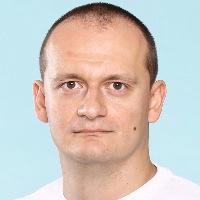
Alexander G. Melnikov
| Office: | Cotton 323 |
| Address: | School of Mathematics and Statistics, Victoria University of Wellington, Kelburn Parade, Wellington, New Zealand |
| Email: | alexander.g.melnikov@gmail.com |
Welcome to my professional personal webpage. I am an Associate Professor at VuW. My research area is computability theory and its applications to algebra, logic, and computer science.
My area is computable mathematics. It combines abstract theory with computation, and connects to logic, algebra, topology, and theoretical computer science. In pure mathematics, we often work with abstract objects that exist because, if they didn't, we would reach a contradiction. In computable mathematics, we ask whether these objects can be described or handled by an algorithm. Making mathematics effective in this way is often necessary if we want to apply it in practice.
For example, we look at abstract groups and ask which ones can be represented on a computer. A group is a way of thinking about symmetry and is used across science, for example in physics and chemistry. To study the computational content of these objects, we usually use Turing machines, finite automata, or other models of computation. Sometimes we limit resources, like space or time. But mostly, in computable mathematics, we want to know if something is computable in principle, without any limits. Interestingly, many algorithms that start as purely theoretical turn out to be practical and efficient. This can sometimes be explained by ideas like generic computability and parameterised complexity, but that's a topic for another time.
Research in this field is deeply connected to other areas of mathematics. Examples include Gödel's Incompleteness Theorem in logic, Higman's Embedding Theorem in group theory, van der Waerden's results on explicit fields in algebraic geometry, Mal'cev's work on applied universal algebra, and Turing's contributions to analysis and number theory. At the same time, abstract computability provides a foundation for more applied work. In fact, basic results from effective algebra are used in standard computational tools like MATLAB, for example in algorithms for factoring polynomials.
In 2006 I graduated from The Department of Mechanics and Mathematics, Novosibirsk State University, at the age of 21. For those unfamiliar with the post-Soviet hierarchy of universities, this is one of the top two or three mathematics departments in Russia, and definitely the top logic school in Russia. I had the highest average score among all the 2006 graduates, which was the maximum possible, 5.0 out of 5.0. I thought maybe it was a sign, and I should try going into academia. In 2008 I defended a MSc thesis in Mathematics and Theoretical Computer Science under the supervision of the famous Sergey S. Goncharov. In 2008, I moved to New Zealand to do a PhD with Bakhadyr Khoussainov and Andre Nies at The University of Auckland.
I greatly enjoyed working with both advisors, who are excellent world-class mathematicians. Back then, the University of Auckland had -- perhaps still has -- a highly unusual restriction on the size of a PhD thesis: it had to be at most 200 pages long, including references. I had no life during my PhD, and I ended up with enough material for almost two such theses. Sergey S. Goncharov suggested I write and submit a Candidate of Science (PhD) dissertation based on the extra material, and I did. Although it may sound like a smart decision, I would not recommend writing two theses simultaneously to anyone who wants to have a life beyond their office.
Shortly after my CSc defence in Russia, and a few months before my PhD confirmation in Auckland, I joined Nanyang Technological University as a postdoc. My wife was a postdoc there as well; that was a perfect solution to the undecidable two-body problem! At NTU I worked mainly with Keng Meng Ng. We still collaborate a lot to this day. Since I was already working in Singapore, my PhD confirmation exam had to be done via Skype. The connection was terrible, but otherwise it was an interesting and memorable experience.
While I was working in Singapore, I kept looking for job opportunities in New Zealand. This is the country I love; I was dreaming of coming back. After one year in Singapore, I returned to New Zealand to work with Rod Downey and Noam Greenberg at Victoria University of Wellington. Both are world-class mathematicians, having had many Marsden grants and numerous postdocs who are now professors at top universities around the globe.
As much as I enjoyed being a postdoc, it was time for me to start worrying about a permanent job. Sadly, it was clear that New Zealand did not have enough jobs in mathematics, let alone pure mathematics. I applied for all of them -- where "all" means "two" -- and I was lucky to get an offer from Massey. Around the same time, I got a postdoc offer from UC Berkeley, which is considered by many the top logic school in the US. Thanks to Gaven Martin, Massey let me go to the US. After working with the gifted Antonio Montalban in California for about a year, I returned to New Zealand in 2015 to join Massey, Auckland. I spent several very productive years at Massey. I became a Rutherford Fellow, which is a significant honour in New Zealand. I also defended a Doctor of Sciences dissertation, which is a huge achievement in Russia, though very few people in New Zealand understand its significance. It was largely irrelevant to my career here (and this is why I did it). Sadly, Massey decided to restructure its science departments, and even though I was highly protected by several grants, the situation there became less enjoyable overall.
In 2021 I moved to VUW, which has one of the top logic departments in the world. I like it here.